
Game Design Journal #3
Of Prototypes & Lines of Sight
It was an exciting moment when I received a small envelope from the printers, for I knew it contained the prototype of my upcoming hex and counter wargame, Demonhand. Plenty of tweaks and adjustments remain, but for now, I’m quite happy with the progress - I will allow these images to speak for themselves.
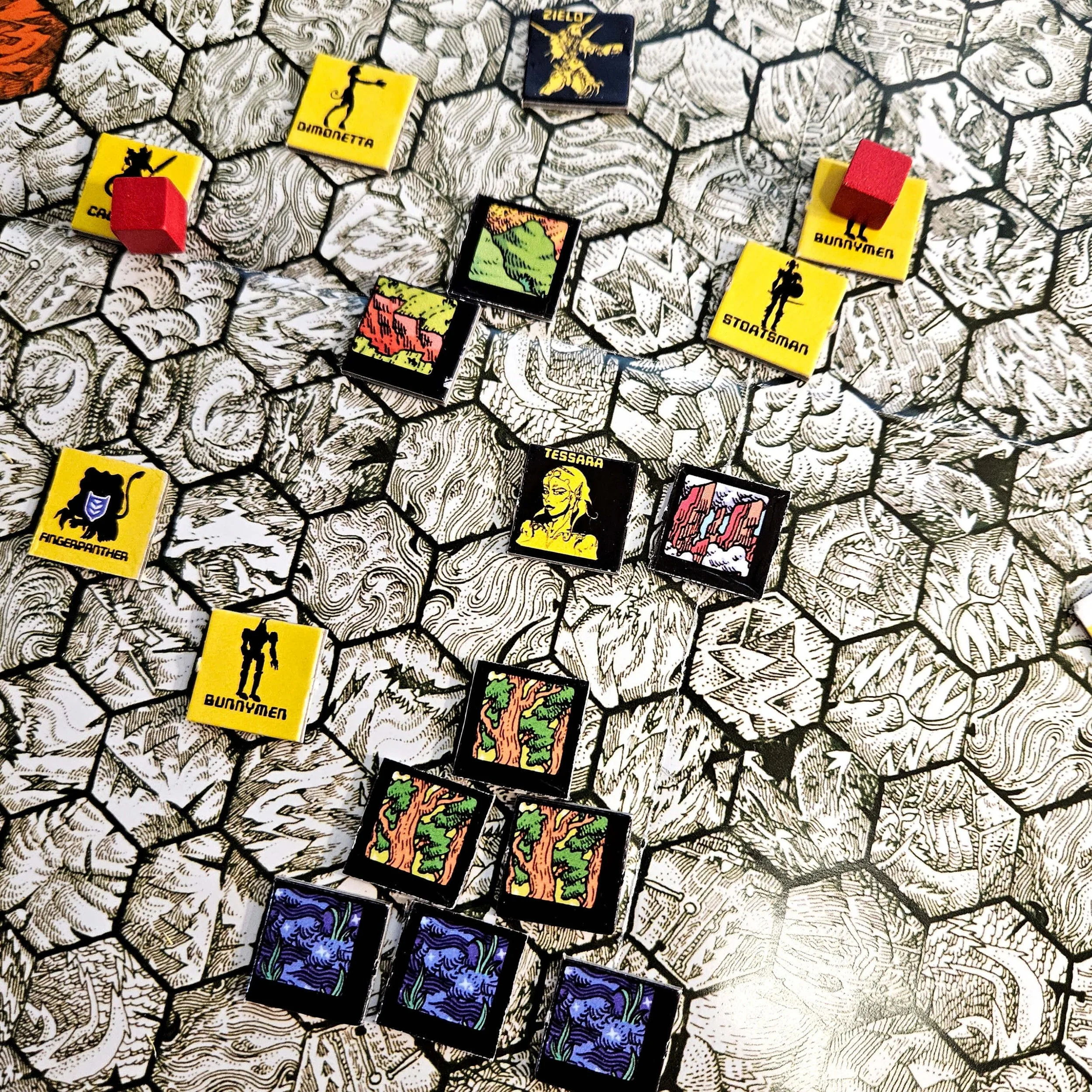
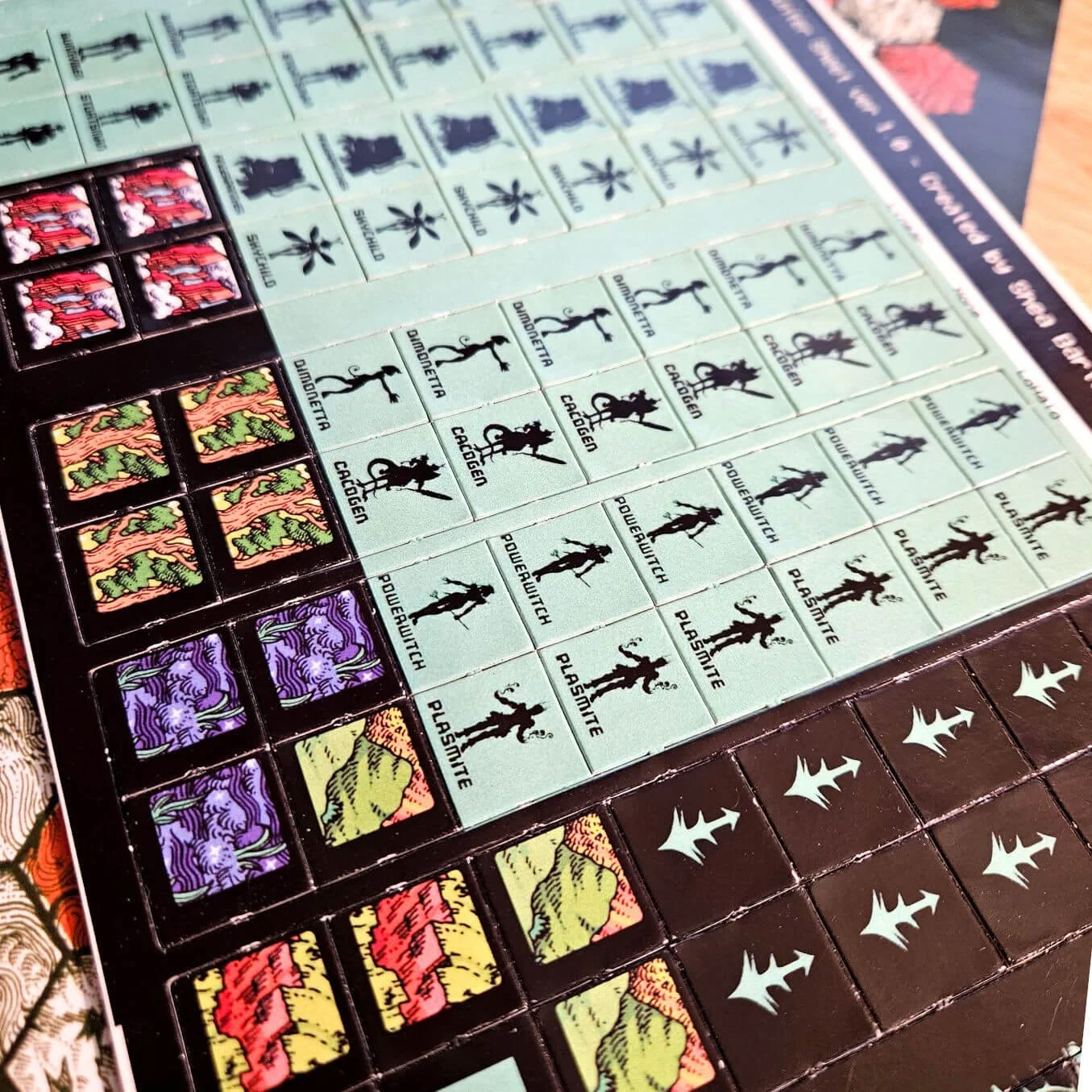
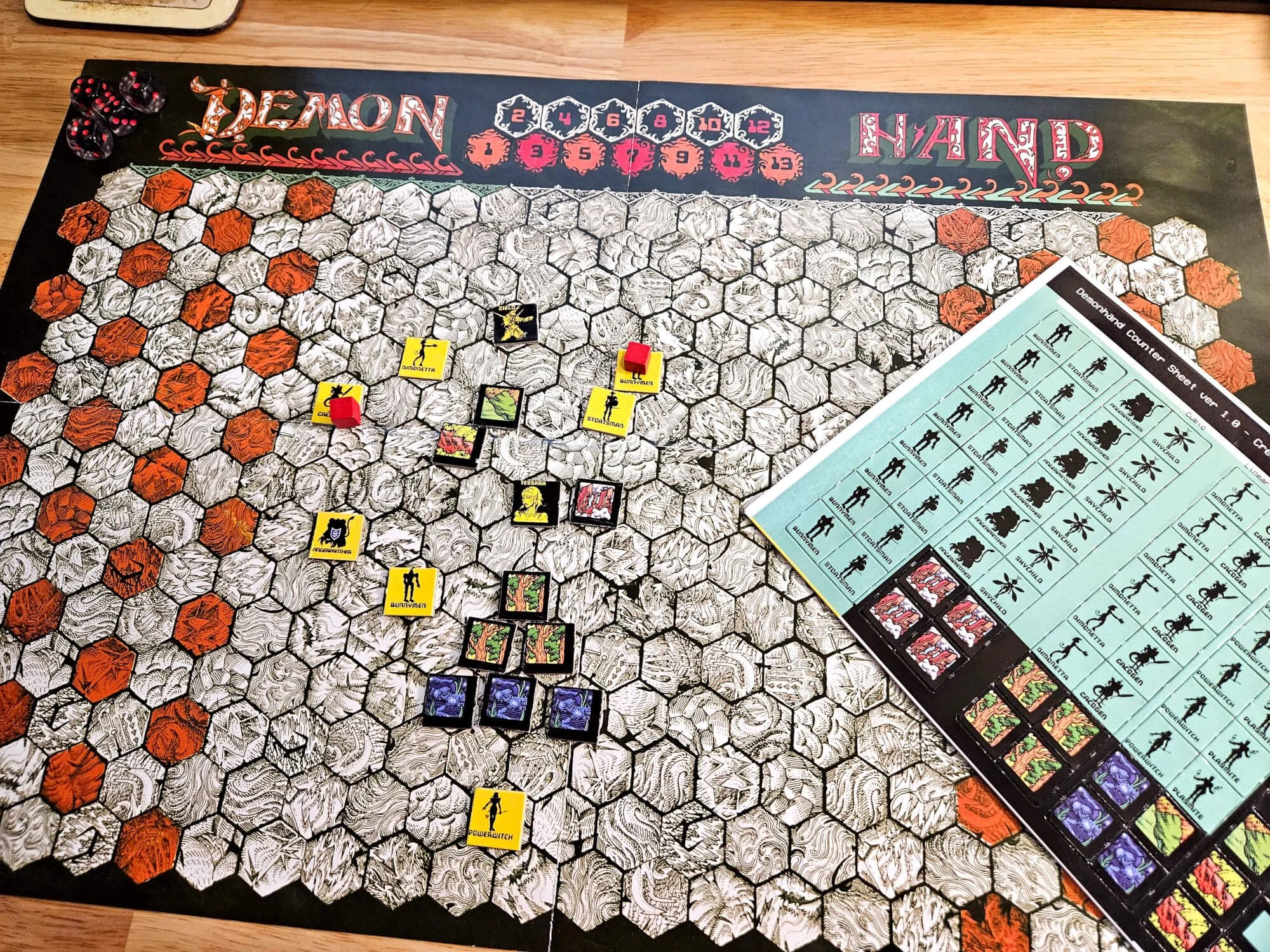

Initial playtests have revealed some promising mechanics, as well as a number of things that clearly aren’t working. It’s amazing how quickly a seemingly clever rule or idea can evaporate in the face of actual gameplay. I find the process of refining, honing, and reworking to be fun. Luckily, I’m blessed with brilliant friends who enjoy thinking critically and aren’t afraid to share feedback.
Line of sight rules proved to be an interesting nut to try and crack. I had assumed it would be straightforward in the format of a hex board, but when it came to determining line of sight with blocked hexes and projectiles, I found it was not so. I had a couple the goal of accurately simulating line of sight while avoiding fiddly rules. It took a bit, but I’ve come up with an initial ruleset that I haven’t found any issues with (yet).
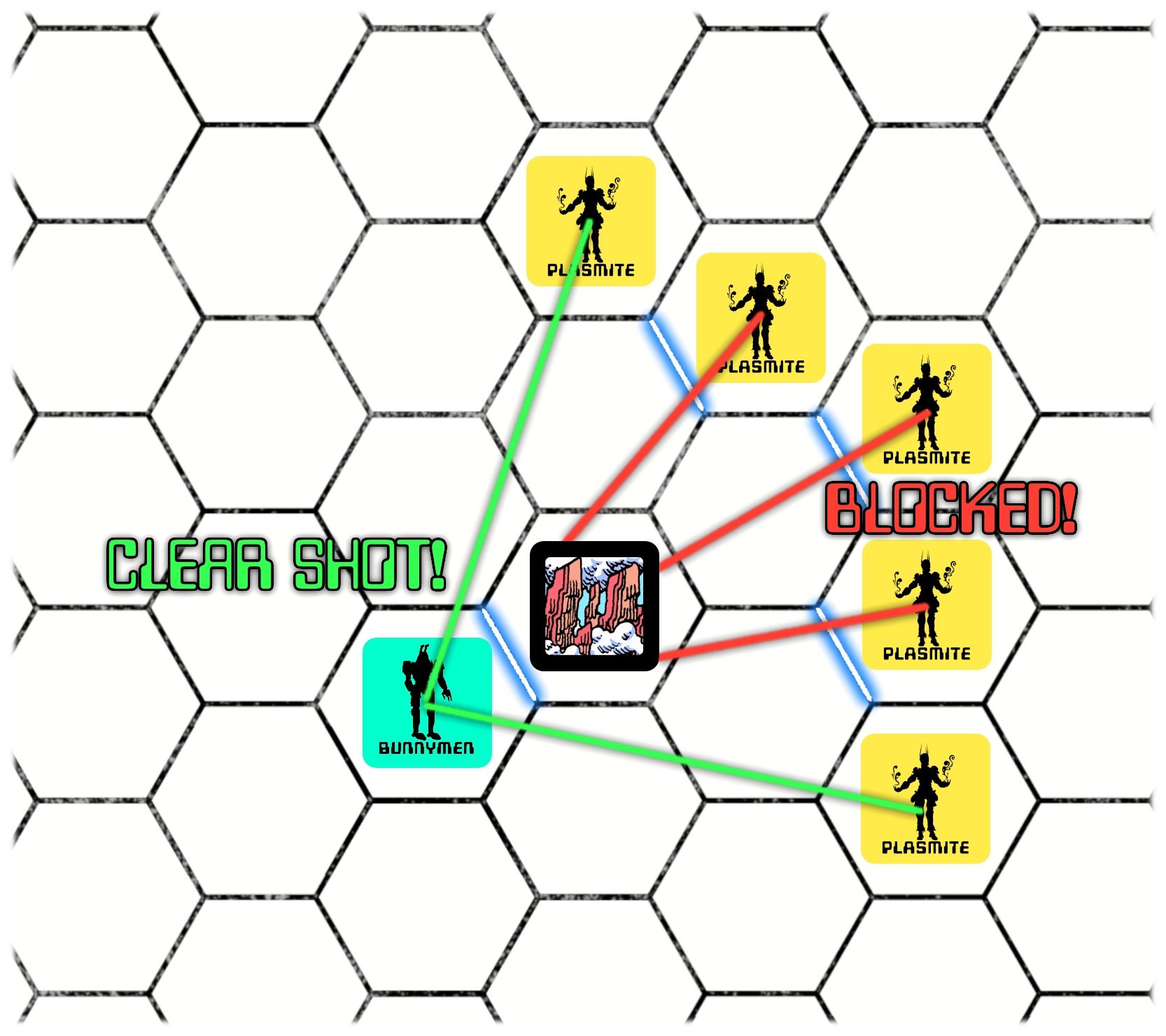
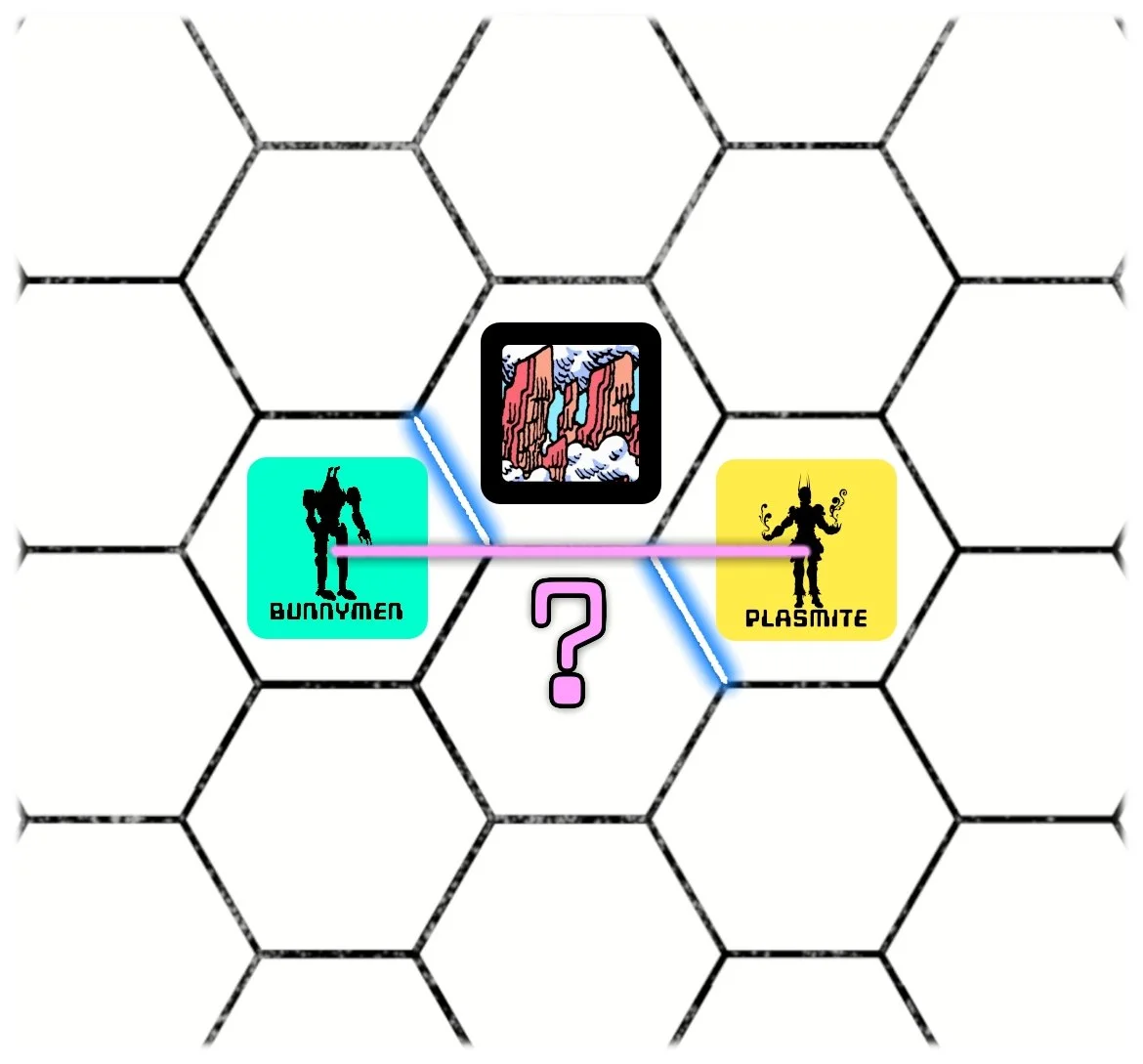
Fig 1. The yellow Plasmites attempt a ranged attack on the blue Bunnymen. Note that the Plasmites whose line of sight is blocked, fire their projectiles through a hex-edge that parallels the edge between the Bunnymen and Spire terrain hexes.
For the purposes of the following examples, our attackers, the Plasmites can be considered to have an unlimited attack range. The poor lone Bunnymen is our defender. The little image with a heavy black outline that somewhat resembles bacon and clouds is the Spire terrain counter. The line of sight rules are as follows:
Line of Sight must be determined anytime a ranged unit wishes to make an attack against an opposing unit. Any hex occupied by a Spire terrain counter has the potential to block Line of Sight. If a Spire occupies a hex between the ranged attacker and defending unit, you can determine if an attacking unit has Line of Sight by following these steps:
Trace a line from the center of the hex occupied by the attacking ranged unit to the center of the hex occupied by the defending unit- this line indicates the path the projectile will follow.
If the edge of the hex the attacker’s projectile emanates from is parallel to the edge between the defender and the Spire hex, Line of Sight is blocked, and the ranged attack will fail.
Translating geometric/spatial functions into a verbal command is a process that makes my brain sweat, but I do find it enjoyable. But wait! There’s a small addendum:
In situations where an attacker’s Line of Sight falls exactly on the center line between the attacker and defender, the attacker rolls one 6-sided die to see if they have line of sight. Even numbers (2,4,6) count as a Success Odd numbers (1,3,5) are counted as failures.
I hope you enjoyed this highly specific journey into my exploration of line of sight! If you notice any glaring errors or problems with the rules I’ve created please, (sigh) let me know. The inclination to hold onto those clever concepts we work so hard to come up with seems like a real pitfall of game design - but what use is cleverness if you’re not having fun?
